19 Housewarming Gifts Better Than A Candle
A housewarming present is the only gift you give into a room that is still being decided. These nineteen get used up, get used daily, or quietly replace something they already own badly.
The candle is not a failure of imagination. It is a solution to a real problem, and the problem is this: a housewarming gift is the only present you are ever asked to give into a room that has not decided what it is yet. The boxes are still stacked in the hall. Nobody knows where the sofa is going. Handing over an object in those conditions is a small act of trespass, and a candle trespasses less than almost anything else, which is precisely why they will receive four of them.
So the useful question is not what looks thoughtful. It is what survives a house whose taste is still forming. Three kinds of thing do. Something that gets used up and leaves nothing behind. Something they will reach for so often that its looks stop mattering. And the better version of a thing they already own badly, which is the most reliable category of all, because the decision has already been made and you are simply improving it.
Nineteen of them below, from a seven-dollar box of salt to a ninety-dollar pot, arranged in that order. The last three are not beautiful. They are on the list because they are the ones people remember.
With affection, the editors.
 PRODUCT // THE TWO OLIVE OILS
 The Two Olive Oils.
Graza, one for the pan, one for the plate.
The reason olive oil turns up on every housewarming list worth reading is that it is the rare gift with no opinion about the room it lands in. Graza splits the job across two bottles, which is the part that makes it a present rather than groceries: Sizzle is cheap enough to cook with freely, Drizzle is the green, peppery one saved for the top of things. Both are squeeze bottles, which sounds trivial until you have watched someone try to pour good oil from a tin. It will be gone by October, and that is the whole argument.
 PRODUCT // THE MARSEILLE SOAP
 The Marseille Soap.
Compagnie de Provence, 500ml, cotton flower.
There is a rule worth stealing from the interiors editors: take a thing the house will need anyway and give the version nobody buys for themselves. Hand soap is the cleanest example. Every new bathroom needs it within the week, nobody spends thirty dollars on it, and the Marseille bottle is handsome enough that it will actually sit out by the sink rather than under it. Made to a formula the city has been using since the seventeenth century, which is a long time to keep getting one thing right.
 PRODUCT // THE FLAKY SALT
 The Flaky Salt.
Maldon, Essex, pyramid crystals.
The cheapest thing on this page, and the one most likely to be used tonight. Maldon is not really seasoning, it is a finish: hollow pyramid flakes that sit on top of a tomato or a piece of bread and crack rather than dissolve. Anyone who cooks and does not have it will convert immediately, and anyone who does have it will simply use yours first. Give it alone if the budget is small, or fill the crock at number seven with it and hand over both.
 PRODUCT // THE MATCH CLOCHE
 The Match Cloche.
Smoked glass, striker base, long matches.
The one candle-adjacent object on this list, and it is here on a technicality that happens to be true: it is not the candle, it is the thing that makes lighting one feel deliberate. A jar of long matches with a striker on the base solves an actual problem, since nobody can find a lighter in a house where the drawers are still unassigned, and it does it in smoked glass rather than a supermarket box. Consider it the gift for the person who is definitely going to be given four candles by other people.
 PRODUCT // THE ENAMELLED DUTCH OVEN
 The Enamelled Dutch Oven.
Lodge, six quarts, cast iron under porcelain.
The single most repeated object across every housewarming guide worth reading, and for once the consensus is right. A six-quart enamelled pot is the vessel a household actually cooks in: bread, braises, the pot of soup that gets made the first cold Sunday in a new house. Lodge makes the honest version, which costs roughly a fifth of the French one and does the same work, and the difference is a name on the lid rather than anything that happens to the food. Comes in enough colours to match a kitchen you have seen once.
 PRODUCT // THE WORKING KNIFE
 The Working Knife.
Victorinox, eight inches, Swiss stamped steel.
Somebody in this house is currently chopping an onion with a knife that came free with a set. This is the knife that professional kitchens buy by the dozen, stamped rather than forged, unlovely in the handle and genuinely excellent in the blade, and it has spent two decades at the top of every serious test at a fraction of what the German ones cost. Buy it for the person who cooks constantly and has never once thought about their equipment. They will notice within a day.
 PRODUCT // THE SALT CROCK
 The Salt Crock.
Le Creuset, ten ounces, glazed stoneware.
A small, specific object that almost nobody buys for themselves and almost everybody wants once they have it. The point is not storage, it is reach: salt kept in a wide-mouthed crock beside the hob gets used with your fingers, in the right quantity, at the right moment, instead of shaken blindly from a cardboard tube. It is also the rare kitchen thing that earns its counter space by looking good on it. Fill it before you wrap it.
 PRODUCT // THE PEPPER MILL
 The Pepper Mill.
Peugeot, beechwood, made in Franche-Comté.
Peugeot made pepper mills for eighty years before it made a single car, and the mechanism is the reason: case-hardened steel that cracks each peppercorn before grinding it, with a ring at the base that sets the coarseness from dust to crushed. Everyone eventually replaces the mill that came from the supermarket. This is the one they replace it with, and then keep for thirty years, which is a strange and rather lovely thing to be able to say about a table object.
 PRODUCT // THE GLASS PITCHER
 The Glass Pitcher.
LifeStraw, seven cups, hand-blown borosilicate.
Nobody knows what is in the pipes of a house they have owned for three weeks, and the standard answer to that anxiety is a cloudy plastic jug that lives in the fridge apologising for itself. This is the same idea executed properly: hand-blown glass on a silicone base, a filter that takes out lead, mercury and the forever chemicals rather than just improving the taste, and a shape that can go on the table in front of guests. Practical gift, but it does not look like one.
 PRODUCT // THE GLASS CONTAINERS
 The Glass Containers.
OXO, sixteen pieces, borosilicate and locking lids.
There is a specific casualty of every move, and it is the lids. They go into a box in one house and simply do not come out in the next, leaving a cupboard of orphaned plastic bases nobody can bring themselves to throw away. Replacing the lot at once is the sort of thing people postpone for years. These are glass rather than plastic, go from freezer to oven without cracking, and stack in a way that makes a new cupboard look organised on the first day, which is a feeling worth giving someone.
 PRODUCT // THE WALNUT BOARD
 The Walnut Board.
Large, with knives, bowls and a slide-out drawer.
The first party in a new house is thrown before the kitchen is ready for it, which is why the cheese board is such a reliable gift: it turns "we have nothing to serve on" into an evening. This is the generous version, big enough for a real spread, with the knives and the little ceramic bowls in a drawer underneath so the whole thing arrives as one object rather than as a board plus a shopping list. It will be on the counter within the hour.
 PRODUCT // THE COUPE GLASSES
 The Coupe Glasses.
Libbey, set of four, American-made glass.
Glassware is the category everybody under-buys and nobody replaces, so most first homes run on a mismatched set inherited from a flatshare. Four coupes fix that for thirty-six dollars, and the coupe is the right shape to send: it holds a cocktail, a glass of champagne, or a scoop of ice cream with equal dignity, and it makes an ordinary Tuesday drink feel like a small occasion. Libbey has been making them in Ohio for over a century, so they are sturdier than they look.
 PRODUCT // THE SPECKLED BOWL
 The Speckled Bowl.
Creative Co-Op, stoneware, white reactive glaze.
One large, plain, good-looking bowl does more work in a new house than any three decorative objects, because it is never actually decoration. It holds salad at dinner, lemons on the counter, keys and post by the door in the fortnight before anyone finds the key rack. The speckled reactive glaze means no two come out quite the same, so it reads as something chosen rather than something bought, which is the whole trick with a gift for a room you have not seen yet.
 PRODUCT // THE NAMED DOORMAT
 The Named Doormat.
Coir, with their surname and the year they arrived.
Personalisation usually ages badly, and a doormat is the exception, because the one fact it carries is the one fact that will still be true in ten years. Their name, the year they got the keys, at the exact spot where the house begins. It is also the rare gift that is unmistakably for the building rather than for the taste of the people inside it, which makes it safe to give to a couple whose style you could not describe under oath. Order early; these are cut to order.
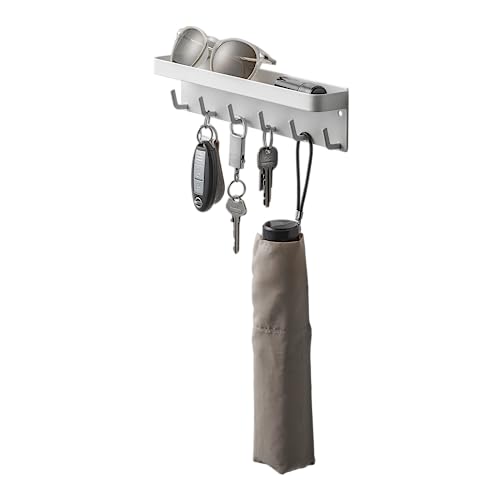 PRODUCT // THE MAGNETIC KEY RACK
 The Magnetic Key Rack.
Yamazaki, powder-coated steel, with a tray.
For the first month in a new house, keys live wherever they were put down, and the ten minutes lost to finding them is the most reliably infuriating part of moving. A magnetic strip with a small shelf ends it on day one: keys on the magnets, post and sunglasses in the tray. It mounts with adhesive or screws, so it works for owners and renters alike, and Yamazaki make it in the quiet, low-profile way that lets it disappear into a hallway rather than announce itself.
 PRODUCT // THE INDOOR WATERING CAN
 The Indoor Watering Can.
Haws, England, making these since 1886.
A plant is the traditional housewarming gift and a slightly cruel one, since it arrives needing care from people who currently cannot find the kettle. The kinder version is the thing that keeps every plant they are about to be given alive: a long-spouted can that reaches the back of a windowsill without flooding the sill, in a size that lives out on display rather than under the sink. Haws have been making the same shape in England since 1886, and it is still the one gardeners ask for by name.
 PRODUCT // THE FIRE EXTINGUISHER
 The Fire Extinguisher.
First Alert, rechargeable, rated for kitchen fires.
Nobody has ever been thrilled to unwrap this, and it is on the list anyway. A great many houses do not have one, almost nobody thinks about it until after something has happened, and it costs less than the bottle of wine you were otherwise going to bring. It is rated for grease and electrical fires, which are the two that start in a kitchen, and it is worth asking their insurer whether having one earns a discount. Wrap it with the olive oil and let the joke do the work.
 PRODUCT // THE STUD FINDER
 The Stud Finder.
Franklin Sensors, thirteen sensors, no calibration.
The first weekend in a new house is spent hanging things, and the standard stud finder is a small liar that beeps in four places and is right about one. This one has thirteen sensors across its width and lights up the entire stud at once, with nothing to calibrate and nothing to slide back and forth hopefully. Give it to anyone about to put a heavy mirror on a wall they have never drilled into. It is the least romantic object here and probably the most used.
 PRODUCT // THE FIRST TOOL SET
 The First Tool Set.
BLACK+DECKER, sixty-five pieces, in a soft bag.
There is a particular evening, usually within the first fortnight, when something needs tightening and the only tool in the house is a butter knife. This ends that evening. Sixty-five pieces covers the honest range of what goes wrong in a home, the hammer and pliers and the tape measure and the bits for flat-pack furniture, and it comes in a soft bag rather than a moulded plastic case, which means it fits in a cupboard instead of demanding a shelf. The gift they will thank you for months later, not on the night.
A few honest questions, answered.
How much should a housewarming gift cost? +
For a friend or a colleague, twenty-five to fifty dollars is the comfortable middle, and nothing on this page except the Dutch oven asks for more than sixty-five. Family tends to spend more, and a group of friends clubbing together for one good object is almost always a better outcome than four separate gifts at the same total. If you are attending a party rather than visiting, keep it small and carryable; anything that needs two hands becomes the host's problem for the rest of the evening.
What should you not give as a housewarming gift? +
Anything that has to be displayed to be appreciated. Wall art, ornaments, framed prints and strongly scented candles all ask the recipient to either find a place for something they did not choose or feel guilty about not doing so, in a house where they have not yet decided anything. The same goes for anything sized to a room you have not seen. If you want to give something decorative, give something decorative that is also functional, which is most of the middle of this list.
Is it rude to give a practical gift for a new home? +
No, and the evidence is that practical gifts are the ones people can still name years later. The distinction that matters is not practical versus pretty, it is whether the object gets used or gets stored. A fire extinguisher and a stud finder are unglamorous and genuinely welcome; a novelty kitchen gadget is neither. If you are worried a useful gift reads as too plain, pair it with something small and consumable and the pair reads as considered.
When should you bring a housewarming gift, and what if you missed the party? +
The traditional window is the first few months, not the first week, and the first week is arguably the worst time to hand somebody another object. Bringing it to the housewarming party itself is standard. If there is no party, or you missed it, anything up to about six months later is entirely normal, and a gift that arrives once the boxes are gone often lands better than one that arrives into the chaos.
What is a good housewarming gift for someone renting rather than buying? +
Everything on this page except the doormat, and even that works if they have their own front door. Renters get overlooked in most new-home guides, which assume a garden and a mortgage, but a rented flat has the same empty kitchen and the same missing tools. Favour the consumables and the things that do not need drilling. The key rack mounts with adhesive for exactly this reason.
The gift that is really
a kind of permission.
What people actually remember about the weeks after a move is not the objects. It is the first meal cooked properly, the first evening somebody came over, the first morning the keys were where they were supposed to be. A good housewarming gift is not really a thing at all; it is a small piece of that, handed over early, before the house has quite worked out how to produce it on its own. Which is why the salt and the fire extinguisher belong on the same list, and why neither of them is a candle.