17 Retirement Gifts For Women Who Earned Every Hour
The retirement aisle is full of objects that commemorate the job she has just put down. What she has actually been handed is time. These seventeen are addressed to the hours.
The gold watch was always a peculiar joke. Forty years of arriving on time, rewarded with an instrument for measuring it. Its descendants are still on sale: the engraved mantel clock, the plaque with the years of service cut into brass, the tumbler with something about wine printed on the side. Every one of them faces backwards, towards the desk she has just cleared, and hands her a souvenir of the thing she is leaving.
What she has actually been given is closer to two thousand unassigned hours a year, and almost nothing in that aisle is addressed to a single one of them. It is not hard to find out where the hours go, either. Ask retired women what they do and the answers arrive in a stubbornly consistent order: they cook, first and by a distance; they read; they look after animals; they garden. Ask in Britain and travel comes near the top too. That is not a personality. It is the shape of a week, and a gift can be aimed at it.
Seventeen of them below, arranged in that order, from a thirteen-dollar field guide to a Kindle at a hundred and sixty. Several are deliberately sized for the office collection rather than one buyer. Only the last two acknowledge the occasion at all, and neither of them has her name on it.
With affection, the editors.
 PRODUCT // THE GLASS COFFEEMAKER
 The Glass Coffeemaker.
Chemex, six cups, with a hundred filters.
Pour-over is a four-minute ritual that asks you to stand there and pay attention, which is either an imposition or the entire appeal depending on what your Tuesday looks like. As of this month, hers looks different. The Chemex has been made to the same 1941 design ever since, a single piece of laboratory glass with a wooden collar, and it is beautiful enough to leave on the counter rather than in the cupboard. Give the bundle rather than the bare carafe: it comes with a hundred filters, so it works the morning it arrives instead of the morning after the next grocery run.
 PRODUCT // THE COOKING LESSON
 The Cooking Lesson.
Samin Nosrat, illustrated by Wendy MacNaughton.
Most cookbooks hand over recipes, which is a way of solving tonight and nothing else. This one hands over the four variables every dish turns on and then teaches you to hear them, so the reader stops following instructions and starts making decisions. It is the book to give the woman who has cooked competently and without pleasure for thirty years because dinner was at seven and there were people waiting. Nobody is waiting now. MacNaughton’s illustrations keep it from ever feeling like homework.
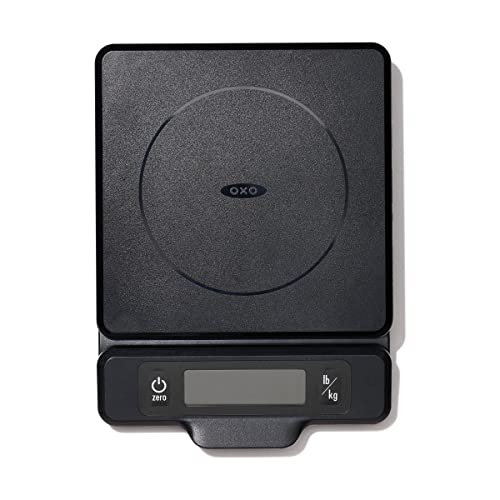 PRODUCT // THE KITCHEN SCALE
 The Kitchen Scale.
OXO Good Grips, five pounds, pull-out display.
Baking is arithmetic wearing an apron, and cups are the reason so many people believe they are bad at it: a cup of flour can vary by a fifth depending on who scooped it. A scale removes the variable entirely. This is the version worth having because of one small idea, a display that slides out from under the bowl on a little tongue, so the number is still readable when the mixing bowl is wider than the machine. Unglamorous, cheap, and quietly responsible for every good loaf that follows.
 PRODUCT // THE SOURDOUGH KIT
 The Sourdough Kit.
Rorecay, rattan baskets, lame and scrapers.
Sourdough is the only hobby that requires you to be home at intervals, which is exactly why it belongs on this list and nowhere near a working woman’s kitchen. A loaf wants feeding, folding and attention across a day and a half, and for the first time in four decades that is not an obstacle. The kit carries the parts that are annoying to assemble one by one: two rattan proofing baskets, their linen covers, a lame with spare blades for scoring, a scraper and a dough whisk. What it produces the first week will be dense. By the fourth it will be the thing she is known for.
 PRODUCT // THE PASTA MACHINE
 The Pasta Machine.
Marcato Atlas 150, chrome steel, made in Italy.
The most expensive thing in this chapter and the one most likely to still be in the family in fifty years, because there is nothing in it to fail: a hand crank, a set of chromed rollers, and a clamp for the edge of the table. Fresh pasta takes a whole afternoon the first time, which is the recommendation rather than the warning. It also makes a good group gift, since it looks like a great deal more than it costs, and it comes out of the cupboard for every birthday thereafter. Cutters for fettuccine and tagliolini are built in; lasagne sheets need no cutter at all.
 PRODUCT // THE SWISS SECATEURS
 The Swiss Secateurs.
Felco No. 6, forged aluminium, the smaller frame.
Felco is the pair that wins every tested comparison, and the useful thing nobody mentions is that the famous No. 2 is not the one most women should be given. The No. 6 is the same tool built on a shorter handle span for medium hands, which means a full day of deadheading without the ache across the base of the thumb. Every component unscrews and can be replaced, blade included, so these get sharpened and rebuilt rather than thrown away. The last pair of secateurs anyone needs to buy her, and she will notice inside ten minutes.
 PRODUCT // THE JAPANESE WEEDING KNIFE
 The Japanese Weeding Knife.
Nisaku, Tomita manufacture, 7.25-inch blade.
A hori hori is a trowel, a weeder, a bulb planter and a root saw that has given up pretending to be four objects. One edge is straight for cutting, the other serrated for sawing through the mat of roots under an established clump, and the blade carries inch markings so bulbs go in at the depth the packet asked for. Gardeners who own one stop carrying anything else. Nisaku makes the original Japanese version, and at twenty-two dollars it is the cheapest way on this page to look like you understood the assignment.
 PRODUCT // THE EIGHT BY FORTY-TWO
 The Eight By Forty-Two.
Vortex Crossfire HD, roof prism, nitrogen sealed.
Eight by forty-two is the configuration birders converge on: steady enough to hold without shaking, wide enough to find the bird again once it moves, and bright enough at dusk to be worth lifting. Plenty of pairs meet that spec around this price. This one is here for the warranty, which is unlimited, unconditional, transferable and not tied to a receipt, so a pair dropped on a path in 2038 is replaced without an argument. That is the difference between buying equipment and giving a present.
 PRODUCT // THE FIELD GUIDE
 The Field Guide.
David Sibley, eastern edition, Knopf.
The cheapest object on this page and the one that turns the binoculars from a gadget into a pursuit, because a bird you can name is a bird you start looking for. Sibley paints rather than photographs, which sounds like nostalgia and is actually accuracy: a painting can show the bird in the posture and light you will really see it in, with the female, the juvenile and the winter plumage on the same page. Buy the eastern edition for anyone east of the Rockies, the western for everyone else. Give it with number eight and the pair does more than either half.
 PRODUCT // THE PAPERWHITE KINDLE
 The Paperwhite Kindle.
Amazon, seven-inch screen, twelve weeks of battery.
The case for an e-reader at sixty-five is not the one Amazon makes. It is the type size. Print runs at whatever the publisher chose, large-print editions cover a sliver of what is published, and the slow shrinking of the world of readable books is a loss most people accept quietly. A screen with adjustable text refuses that trade: everything ever published stays available at whatever size the eye now wants. The rest is a bonus. No notifications, weeks between charges, and it survives the bath.
 PRODUCT // THE COZYCHIC THROW
 The CozyChic Throw.
Barefoot Dreams, cream, 54 by 72 inches.
Every gift list aimed at women of any age arrives eventually at a blanket, and the reason is not laziness: it is the only luxury with no sizing, no taste risk and no wrong answer, which matters enormously when the giver is a colleague who has never seen the inside of her house. What separates this one from the pile on the shop floor is that the knit does not pill into a matted grey square after a winter of actual use. It stays the thing you would put over your knees in front of somebody. Buy it in cream and let her decide what it goes with.
 PRODUCT // THE THOUSAND PIECES
 The Thousand Pieces.
Ravensburger, The Reading Room, puzzling since 1891.
A jigsaw is the correct gift for the specific hour that catches new retirees out, the one at three in the afternoon when the house is quiet and the day has no further requirements. Ravensburger is the brand people re-buy after one experience of a cheap puzzle, because the pieces are die-cut individually rather than in a repeating grid, so a piece that fits is a piece that belongs. This image is a library, all lamplight and overstuffed chairs, which is either on the nose or exactly right.
 PRODUCT // THE PACKING CUBE
 The Packing Cube.
Peak Design, medium, in sage.
The first trip taken without a return date attached to a Monday tends to be longer than any she has taken before, and long trips are where packing systems stop being fussy and start being the difference between rummaging and living. The two-sided design is the whole idea: clean on one side of the divider, worn on the other, so nothing has to be sorted on a hotel bed. It expands when she overpacks, compresses when the case will not shut, and holds its shape either way.
 PRODUCT // THE PASSPORT COVER
 The Passport Cover.
Bellroy, black leather, six card slots.
The anxious minute at the desk, patting four pockets in sequence, is not about forgetfulness. It is about a passport, a boarding pass, a card and a folded receipt living in four different places. This puts all of it in one slim leather cover that goes in a coat rather than a bag, and it is the rare travel object that improves rather than degrades over a decade, since good leather takes a shine from being handled. Expensive for what it is. Also the thing she will touch on every single day of the trip.
 PRODUCT // THE TRAVEL PILLOW
 The Travel Pillow.
Cabeau Evolution S3, memory foam, jet black.
Every U-shaped cushion in the airport shop solves the wrong problem. They hold the head from the sides, and the head does not fall sideways, it falls forward, which is what wakes you and what leaves the neck wrecked on arrival. This one straps to the seat back so there is something to lean against, which is the only mechanism that actually works. It squashes into a third of its size in the supplied case and clips onto a suitcase handle, and the cover comes off for the wash.
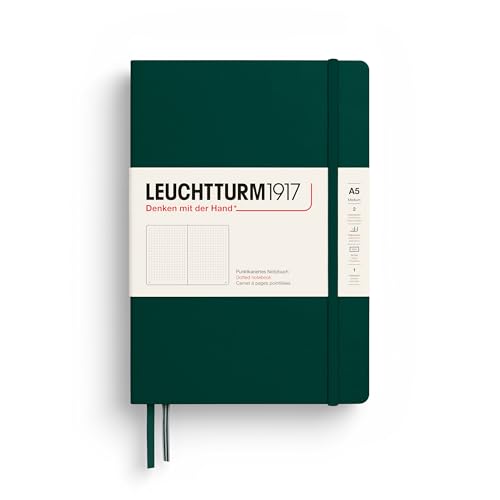 PRODUCT // THE NUMBERED NOTEBOOK
 The Numbered Notebook.
Leuchtturm1917, A5, forest green, dotted.
The only honest way to give somebody a blank book is to admit you do not know what it is for, and that this is the point. Every page is numbered and the first spread is an index, which means it can become whatever the year turns it into: the garden log, the reading list, the grandchildren’s sayings, the memoir nobody has asked her to write and everybody will read. It is thread-bound so it lies flat, and it has an elastic and a pocket for the things that end up loose. Give it with the pen below.
 PRODUCT // THE FOUNTAIN PEN
 The Fountain Pen.
Lamy Safari in umbra, medium nib, German steel.
A fountain pen is a small argument for slowing down, made without saying anything embarrassing out loud, which is why it is the right thing to hand a woman on the day she stops being required to be efficient. The Safari has been in production since 1980 and remains the pen serious people recommend to beginners: moulded grip, steel nib that will outlast the notebook, ink you refill rather than throw away. In umbra it is matte and dark and entirely unfussy, which is the version to choose when the alternative colourways look like stationery for a sixth-former.
A few honest questions, answered.
How much should you spend on a retirement gift? +
It depends entirely on who is paying. A pooled office collection usually lands between ten and twenty dollars a head, which is why so many of these pages are useless: they assume one buyer. A whip-round of eight people has a hundred and twenty dollars and should buy one good object rather than a basket of small ones, which is what the pasta machine, the binoculars and the Kindle are doing on this list. A colleague buying alone is comfortable at twenty-five to fifty. Family tends to spend seventy-five to a hundred and fifty, and is the only category that should consider the passport cover.
What do you give a woman retiring from teaching or nursing? +
Something with no connection to teaching or nursing. The instinct to buy the apple-themed thing or the stethoscope charm is understandable and almost always wrong, because thirty years in, the profession has stopped being a charming quirk and has become the thing she is walking away from. This is the last day it is polite to define her by her job. Everything on this page works for a retiring teacher precisely because none of it mentions one.
Are engraved or personalised gifts a good idea? +
Only when the engraving is about her rather than about the employer. A name, a date, a private line from someone who knows her: all fine, and they age well. Years of service, a company logo, a job title or the words "in recognition of" turn a gift into a document, and documents get put in a drawer. If a group wants to mark the occasion in writing, the better format is a card everybody actually signs, given alongside an object that carries nothing on it at all.
What should you avoid giving a retiree? +
Clocks, first. They are the traditional retirement gift and a strange joke at her expense, since the reward for four decades of punctuality should not be another instrument for measuring the hours. Then plaques and desk ornaments, which require display space for something she did not choose. Then novelty mugs and tumblers with a slogan about wine or freedom, which are funny once, in the room, and then live forever in a cupboard. The test is simple: will this still be in the house in three years?
What do you buy if you only know her from work? +
Choose from the universal end rather than guessing at a hobby you have not seen. The throw, the jigsaw, the cookbook, the field guide and the kitchen scale all work without knowing anything about her house, her taste or her size, and none of them presumes to tell her what her retirement is going to be about. If you do know one real thing, use it: the woman who talked about her garden every spring should be given the secateurs, and she will remember who chose them.
What the hours are
actually for.
The cruelty of the plaque is not that it is ugly, though it is. It is that it treats the last day as the summary of everything, when for most women it is the first morning of the longest stretch of unclaimed time they have ever had. Nobody needs reminding of what they did. What helps is an object that assumes something is still coming: bread that wants attention on a Wednesday, a bird that needs a name, a case that has to be packed. Give her the beginning of something, and let the company keep the clock.